
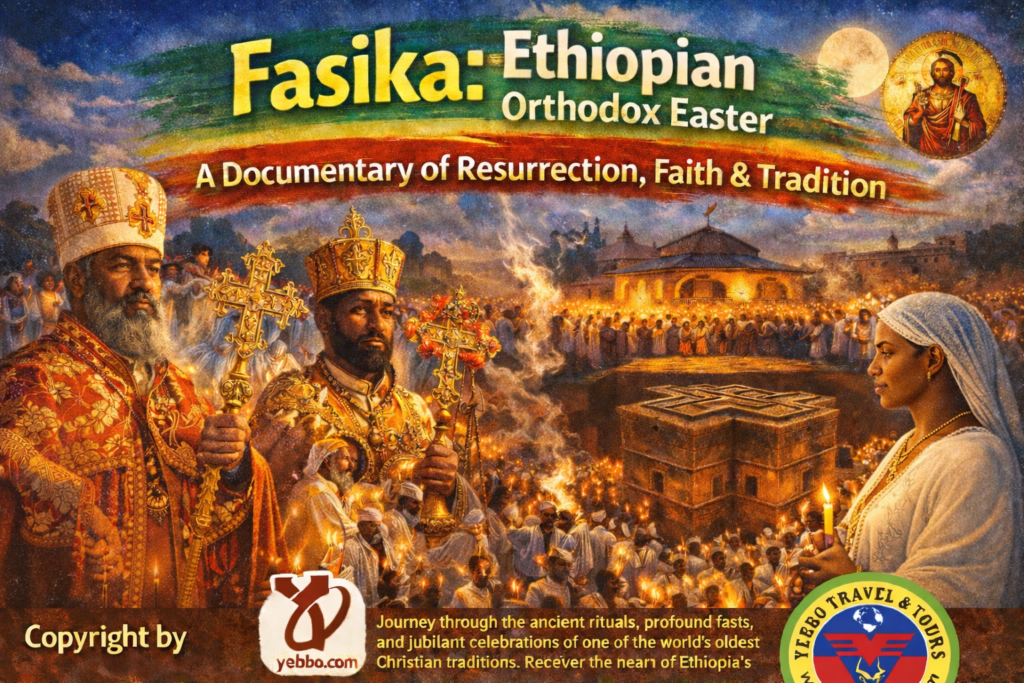
Fasika: Ethiopian Orthodox Easter (Tensae) Documentary
Historical and Religious Context
Ethiopian Orthodox Easter, known as ፋሲካ (Fasika) and ትንሣኤ (Tensae, “Resurrection”), is deeply rooted in one of the world’s oldest Christian traditions. Christianity took hold in the Kingdom of Aksum in the 4th century when Saint Frumentius – called Abba Selama (Father of Peace) by Ethiopians – converted and baptized King Ezana, leading the nation to embrace the faith. Since those early days (ዘመነ ፍሬምናጦስ), the Ethiopian Orthodox Tewahedo Church has celebrated the Resurrection of Christ as the cornerstone of its theology.
In fact, Fasika is considered a more important feast than Christmas, as the Death and Resurrection of Jesus are seen as the fulfillment of God’s promise and the triumph over death. The very name “Tewahedo” signifies unity – originally referring to the unified divine-human nature of Christ – and the Paschal victory of Christ unites the faithful in joy and hope each year.
Narrator: In Ethiopia, Easter is more than a date on the calendar; it is the culmination of a journey of faith. It connects directly back to the time of St. Frumentius and King Ezana. It is the day that defines the very essence of Tewahedo Christianity – the day of victory, of hope, and of unity in a land that has cherished this faith for ages.
Holy Week Chronology and Traditions
Ethiopian Orthodox Christians observe a rich tapestry of traditions in the lead-up to Fasika, especially during Holy Week (known as Himanot or Semune Himamat in Ge’ez). The journey begins long before Easter Sunday, with a rigorous fasting period and a series of holy days that reenact the final events of Jesus Christ’s life on earth.
ዓብይ ጾም – Abiy Tsom (Great Lent)
A 55-day fasting period where believers abstain from all animal products. This spiritual discipline includes prayer, repentance, and charity, culminating in Holy Week.
ሆሳዕና – Hosa’ena (Palm Sunday)
Commemorates Jesus’s triumphant entry into Jerusalem. Churches are adorned with palm fronds and fresh grass, and worshippers receive palms knotted into crosses.
ጾመ ሐሙስ – Tsome Hamus (Maundy Thursday)
Remembers the Last Supper and institution of the Eucharist. Priests wash the feet of twelve parishioners in a moving act of humility.
ስቅለት – Siklet (Good Friday)
A day of intense mourning, prayer, and prostrations. The faithful often fast completely, and priests perform the olive branch ritual symbolizing Christ’s suffering.
ቅዳሜ ሹር – Kidame Shur (Holy Saturday)
A day of quiet vigil and hope as Christ rests in the tomb. The faithful prepare for the night’s Easter vigil, which begins at sunset.
The Resurrection Celebration
“Kristos Tenestwal!”
Christ is Risen!
“በርጊት ተንሥዐ!“
Bergit Tenestwal! – Truly, He is Risen!
At the stroke of midnight, darkness is shattered. A flame is lit, bells erupt, sistrums rattle, and ululations (elelelelu!) fill the air. The solemn vigil transforms into an ecstatic celebration of the Divine Liturgy of Fasika.
The late-night vigil transitions into the Easter Sunday celebration. In the wee hours (often between 12 a.m. and 3 a.m.), the Ethiopian Orthodox Church conducts the full Easter mass – a truly festive liturgy. The church that was dark and mournful now glows with dozens of candles and lanterns.
Clergy don their brightest robes, sometimes switching to white or gold garments symbolizing glory. The tabots (sacred replicas of the Ark) that were shrouded are now unveiled and lifted high, and a procession circles the church grounds three times, representing the women who went to Jesus’s tomb three days after His death.
Fasting and Feast: A Sacred Rhythm
One cannot speak of Fasika without speaking of fasting and food, two sides of the same coin in Ethiopian tradition. The long period of self-denial during Abiy Tsom makes the joyful eating on Easter all the more meaningful.
ጾም – The Fast
For 55 days, a disciplined vegan diet of tsom megeb: Shiro, Atkilt, Misir. A spiritual cleansing of body and soul.
ፍላጎ – The Breaking
At dawn, families share Difo Dabo (Easter bread) and gently break their fast, a quiet moment of gratitude.
ውግራጫ – The Celebration
The table overflows: the iconic Doro Wot with 12 eggs (for the Apostles), rich Key Wot, Kitfo, and Tibs. Tej (honey wine) and Tella flow, accompanied by the sacred coffee ceremony.
Narrator: The table tells the story: for two months it bore humble vegan fare, and now it overflows with meat and spice. In Ethiopia, fasting and feasting are both acts of worship – first to purify the soul, then to glorify God through joyful celebration.
Fasika is the annual miracle that brings a nation to its knees in prayer and then to its feet in dance. It is the living heart of Ethiopia’s spiritual identity—a testament to a hope that has endured for millennia.
Experience the Dawn of Resurrection
Let Yebbo Travel and Tours, part of the Yebbo Communication Network with over 25 years of trusted service, guide you on a pilgrimage to experience the awe-inspiring celebration of Fasika firsthand.
Journey to the ancient churches of Lalibela, join the faithful in Addis Ababa, and taste the feast of resurrection.
Call to Inquire: 619-255-5530A Cultural Feature by Yebbo.Com & Yebbo Travel and Tours